Faculty Responsibilities
Amarillo CollegeDisability Services
Partnering for Student Success
A Faculty Guide to Accommodations & Best Practices
Disability Services determines and issues accommodations; faculty implement them once they receive their plans. This guide covers the process, faculty responsibilities, and common accommodation types. It's a quick reference, not a full policy manual — for anything not covered here, contact Disability Services directly.
We're a resource for you, not just for students. If you're unsure how to implement accommodation, adapt materials, or work through a tricky situation, just ask! We are always happy to help find a solution.
Note: Questions about anything in this guide? We'd genuinely rather you ask than guess. Reach out to Disability Services any time — we're glad to be a resource anytime you need it!
About Disability Services and Accommodations
Accommodations aren't a rare exception — they're part of the everyday reality in a typical AC classroom.
1 in 5
One in 5 undergraduates nationally report a disability (NCES).
Only 37%
Only 37% of students with a disability report their disability to their college (NCES).
Majority
The majority of disabilities on campus are invisible (chronic health, mental health, or learning-related).
The Takeaway
The takeaway: the student who needs extended time or a quiet testing space is not an outlier. Building accommodations into your normal routine, rather than treating each request as a special case, makes your semester easier too.
Nationally, about 1 in 5 undergraduates report having a disability. On our campus, roughly 1 in 13 students are formally registered with Disability Services — a gap that most likely reflects students who haven't connected with our office yet, not fewer students with disabilities.
Faculty are often a student's first point of contact. Mentioning Disability Services in class, in a syllabus, or one-on-one when a student discloses a challenge can be what prompts them to register and access support they're entitled to. A brief, matter-of-fact mention normalizes the process and lowers the barrier to reaching out.
Accommodations Are | Accommodations Are Not |
|---|---|
| A legally required, individualized adjustment that gives a student equal access to your course | An unfair advantage over other students |
| Determined through documentation review by Disability Services, not by faculty judgment | Something faculty are expected to diagnose, verify, or question |
| A way to remove barriers to demonstrating knowledge — not a lowering of standards | A change to the essential learning outcomes of your course |
| Confidential — you'll receive an accommodation plan, not a diagnosis | Information you're entitled to ask a student to explain or justify |
- Students make accommodation requests directly through Disability Services, complete the online application form and submit documentation.
- Disability Services holds an intake meeting to determine eligible, reasonable accommodations.
- The student provides an official accommodation plan for you each semester. (Faculty also has access to accommodation plans).
- You implement the listed accommodations and reach out to DS with any questions about how.
- Once you have an accommodation plan, implement the listed accommodations — you don't need to independently evaluate whether they're warranted.
- If accommodation seems genuinely incompatible with an essential course requirement, contact Disability Services to talk it through together — don't deny it unilaterally.
- Keep accommodation plans and any disability-related information confidential; never identify students’ disability or accommodation status in the presence of other students.
- If a student discloses a disability but hasn't gone through Disability Services, you can point them there — you should not accommodate them informally, and DS is glad to take it from here.
- Review the accommodations statement in your syllabus with your class each semester.
Accommodation | What Helps in practice |
|---|---|
| Enrollment Center Testing Center | Coordinate with the Testing Center early in the term rather than the week of the exam. Send exams to the Testing Center ahead of the scheduled time, and complete required Testing Request Forms in AC Connect for each exam, so there's no last-minute scramble. |
| Additional Testing Time | Ensure extra time is entered through Blackboard, and accommodations are listed on all testing forms. When testing in class, plan accordingly ahead of time instead of waiting until the day of the exam. |
| Isolated Testing | Plan ahead to have these students test in the testing center. Give the same instructions and materials you would give in class. |
| Notes from Instructor | Post slides, overview, or outline in advance, so notes supplement rather than replace a student’s own listening. |
| Alternative Format Materials | Choose accessible, text-based PDFs rather than scanned images whenever possible — it saves conversion time and makes your content accessible. Reach out to DS early for large print, e-text, captioning, Braille, or any other accessibility needs. |
| Flexible Attendance/Deadlines | This accommodates disability-related flare-ups, hospitalizations, treatments, and other disability-related absences. DS can discuss reasonable limits with you. Agree on a simple check-in process (e.g., a quick email) so flexibility doesn’t become guesswork. |
| Assistive Technology/Captioning | Caption videos you assign, link ones that are already captioned, enable auto-captioning, or contact DS to assist with captioning videos. If you are unsure whether a tool or platform is accessible, ask DS or IT before the semester begins. Don’t wait! |
These aren't required accommodations — they're low-cost habits that tend to reduce the number of individual accommodation requests you need to manage.
- Post readings and slides a few days ahead of class.
- Use a clear, consistent structure and a legible font/size.
- Offer one low-stakes way to demonstrate understanding beyond a single high-stakes exam.
- Caption or transcribe video content by default.
- State expectations for participation and deadlines explicitly, in writing.
You can access Student Accommodation Plans. While we recommend that students email or hand-deliver their plans directly to instructors, we know that this does not always consistently occur. To ensure students consistently receive the accommodations they are entitled to, we have made it possible for faculty to access the accommodation plans for all students on their class rosters. You can access these the same way students do, following the steps below:
- AC Connect
- Forms
- Student Forms
- Disability — Application for Services and Accommodations
Sierra Villarreal
Administrative Assistant
- General Questions
- Appointments
- Getting Students Started
- Office: (806) 345-5639
- Email: srvillarreal@actx.edu
Nikki Davis
Specialist
- Student Referrals
- Dual Credit
- ASL Interpreters & Reader/Scribes
- Office: (806) 371-5436
- Email: ndhill22@actx.edu
Jerri Peacock-Najera
Coordinator
- Grievances/Complaints
- Complex Situations
- Accommodation Approvals & Implementation
- Office: (806) 371-5917
- Email: jmpeacock21@actx.edu
Common Questions
Contact Information
Appointments
In-person and virtual appointments available.
Office
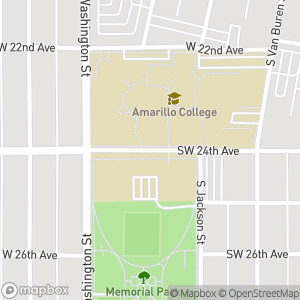
Washington Street Campus
Enrollment Center, Suite 700
Phone
Hours
- Mon-Thurs: 9:00am-6:00pm
- Friday: 9:00am-1:00pm
Contact Us
Regular Hours
Monday - Thursday: 9:00am to 6:00pm
Friday: 9:00am to 1:00pm
Saturday/Sunday: Closed
In-Person and Virtual services available.